

Signs Your Email Automation Has Stalled
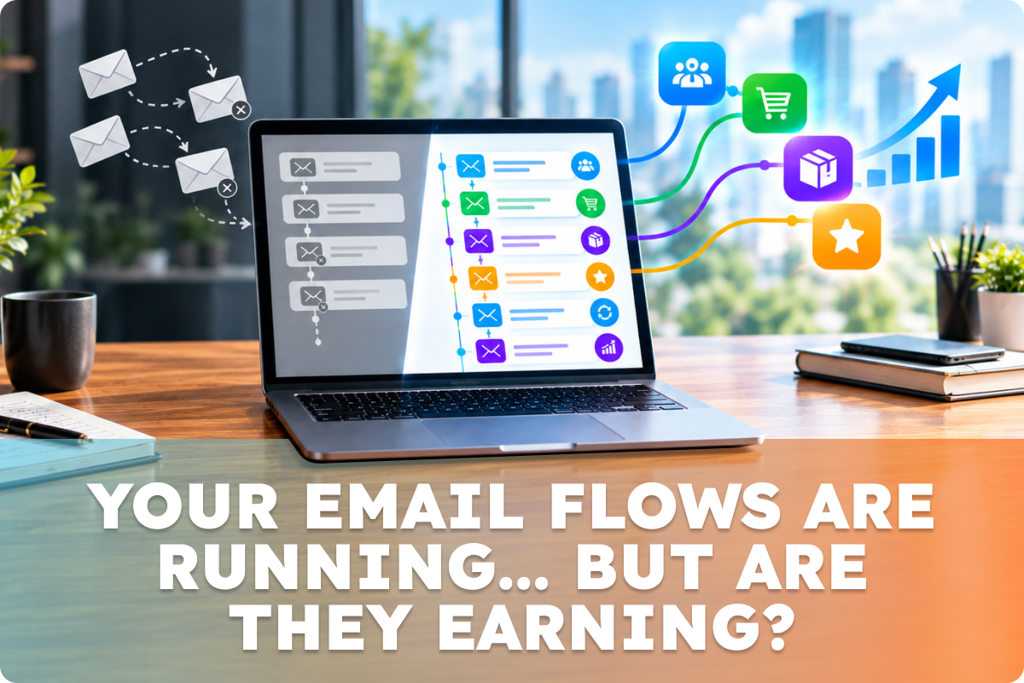
Email remains one of the highest-return channels available to any ecommerce or B2B business, but only when the automation behind it is actually built out.
A lot of businesses set up a handful of flows years ago, watched them run without complaint, and never touched them again. The flows still send. Revenue still trickles in. What's missing is everything those flows could be doing instead.
Here are five signs your email automation has stalled, and what's likely costing you because of it.
1. Your Welcome Series Is a Single Email
A new subscriber just told you they're interested. That's the highest point of engagement they'll ever have with your brand. A single "thanks for signing up" email wastes most of it.
A real welcome series introduces your story, sets expectations for what subscribers will receive and how often, and gives them a reason to buy before that initial interest cools off.
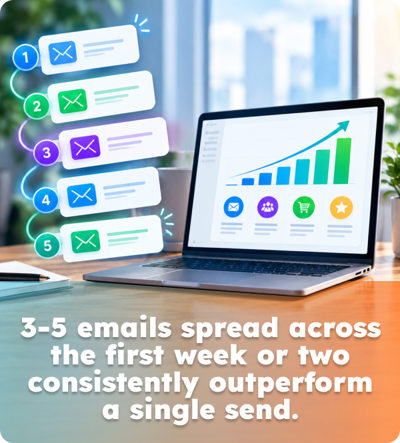
Three to five emails spread across the first week or two consistently outperform a single send, because each message gives a new subscriber another reason to engage instead of one shot to land.
2. You're Sending the Same Email to Everyone
A first-time browser, a repeat customer, and someone who abandoned a cart last week are in three completely different places. Sending all three the same campaign treats a cold contact and a loyal buyer as identical, and it shows in the results.
Segmentation by purchase history, browsing behavior, engagement level, or customer lifecycle stage lets each group get a message that meets them where they are.
Mailchimp's own analysis of nearly nine million recipients found that segmented campaigns saw click rates roughly double those of non-segmented sends, with open rates about 14% higher on average. Open rate has gotten murkier as a signal since Apple Mail Privacy Protection started preloading images regardless of whether a subscriber actually opened the email, so clicks and conversions are the numbers worth trusting most. Even a basic split, like new versus returning customers, tends to move both.
3. Your Abandoned Cart Flow Stops After One Reminder
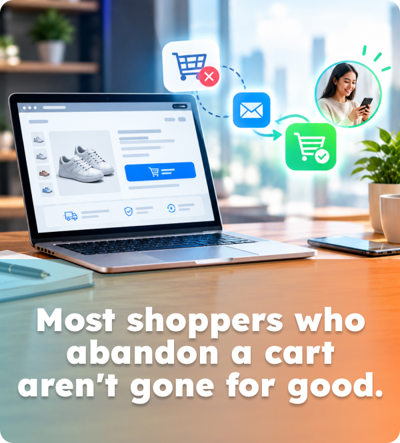
Most shoppers who abandon a cart aren't gone for good. They got distracted, wanted to compare prices, or needed to check with someone else on the purchase.
One reminder email catches a fraction of them. A built-out abandoned cart flow follows up two or three times over several days, with each message doing something different: a gentle reminder first, a nudge addressing common hesitations second, and an incentive or urgency cue third if the first two didn't convert.
Ecommerce data backs this up: Omnisend found that merchants using a three-email abandoned cart sequence generated nearly 70% more orders than those sending a single reminder, according to HubSpot's abandoned cart email guide. Businesses that extend this flow beyond one email are leaving real revenue on the table if they don't.
4. You Haven't A/B Tested in Months
Subject lines decide whether an email gets opened, but they're only one lever. CTA copy and placement, image assets, layout, and offer or incentive all shape performance too, and audience preferences shift as buying patterns and inboxes change. An approach that once performed well can quietly decline, and there's no way to know without testing.
Regular A/B testing across these elements, changing one variable at a time so the results stay clean, keeps your email strategy improving instead of coasting on assumptions. Even a simple ongoing test, like comparing a question-based subject line against a benefit-based one, generates data that compounds. Skip it long enough, and you're quietly leaving conversions on the table with every send.
5. You Have No Post-Purchase Flow
A sale closing is the easy part to celebrate and the easy part to walk away from. A customer who just bought is primed for a receipt confirmation, shipping updates, product education, and eventually a nudge toward their next purchase. Without a post-purchase flow, that entire window goes untouched.
A post-purchase flow builds loyalty and repeat revenue while costing far less than acquiring a new customer to replace one who churns, and Harvard Business Review has put the gap at five to twenty-five times more expensive to acquire a customer than to retain one. It's also where cross-sell, replenishment, and a nudge toward a quick second purchase perform best, because the customer is already engaged, already trusts you, and the repeat-purchase cycle is easiest to start while that trust is fresh.
Building the System Behind the Send
None of these fixes require ripping out an existing program and starting over. Each one is an addition: another email in a sequence, a segment split, a new test, a flow that didn't exist before. Layered together, they turn automation from a background task into a consistent revenue engine.
MoJo Active's email marketing and automation services are built around exactly this kind of work: welcome series, segmentation, abandoned cart recovery, subject line testing, and post-purchase flows designed to work together instead of running on autopilot.
If your flows haven't been touched in a while, now is a good time to look at what they could be doing. Contact us to talk through where your email program stands today and what a rebuilt one could drive.